How AI Is Changing Content Marketing in 2025
As we move through 2025, content marketing is being upended by AI. From generative tools and hyper-personalization to AI agents and brand-safe automation, here’s how cutting-edge content strategies are evolving—and how your brand can lead.
1.From First Draft to Final Polish: Generative AI in Action
Creating content remains a time sink: social posts, blogs, videos, newsletters—content marketers spend roughly 33 hours per week on this. Generative AI now steps in to handle first drafts, freeing human creatives to refine, contextualize, and elevate the output.
Tools like Sprinklr AI+ offer multi-channel drafting—including for Facebook, TikTok, blogs, emails, press releases—reducing hours of effort to minutes.(Sprinklr)

2. Smarter Personalization: Context-Aware and Intent-Driven
AI is no longer generic—it’s deeply personalized. Imagine a travel site where marketing messages change based on whether you clicked in via TikTok or Google. Enter AI agents from Adobe that tailor content on the fly—matching tone, style, and intent to user origin.(Reuters)
Similarly, tools like ContentGrip predict user behavior, enabling hyper-personalized journeys that feel intuitive and smart.(ContentGrip)
3. AI Agents Are Taking Over Marketing Workflows
Adobe isn’t alone—major brands are now deploying AI agents. Infosys and Adobe’s partnership brings AI-powered workflows to global marketers, unifying content creation, delivery, and personalization—all automated with AI-informed strategy.(The Economic Times)
4. Meta’s AI Ad Revolution
By 2026, Meta (Facebook, Instagram, WhatsApp) is planning fully AI-generated ad campaigns—complete with images, videos, and targeting built autonomously based on objectives. This ambitious roadmap signals a bold shift toward automated, scalable branding.(The Guardian)
5. Content Creation 3.0: AI Avatars, Virtual Influencers, and Beyond
AI-generated personas are becoming marketing tools. Vodafone’s new TikTok campaign used a fully AI-generated presenter—proof of how synthetic influencers are entering mainstream branding.(The Verge)
On the fashion front, AI “glam bots” are replacing traditional models—Mango, Nike, Louis Vuitton are embracing them for creative, cost-efficient campaigns.(New York Post)
6. Publishing Transformed: AI Search Tools for Content Creators
Content creators are adopting embedded AI search engines. ProRata.ai raised $40M to offer publishers Gist Answers—AI-generated summaries and recommendations powered by their content—helping monetize and preserve content equity.(Axios)
7. Hyper-Speed Content from Archives: AI Studio for Broadcasters
At IBC2025, Quickplay introduced AI Studio, a generative platform that auto-extracts key video moments and verticalizes content for TikTok, YouTube, and more—revolutionizing repurposing workflows.(TV Tech)
8. AI Metadata: Human + Machine Co-Creation Wins
AI-generated metadata can boost engagement—but with a caveat. A large-scale experiment revealed that AI-generated titles increased content viewership by 1.6–7.1%, yet human-overwritten versions outperformed purely AI titles—highlighting the power of collaboration.(arXiv)
9. The Double-Edged Sword: AI Oversupply & Quality Risk
One academic study warns of “AI content oversupply”, where low-quality content floods platforms, causing user fatigue and degrading overall value. It highlights a growing issue: large volumes don’t always equal better engagement.(arXiv)
10. AI + Human Creativity: The Winning Formula
Humans still matter. Around 50% of consumers can identify AI-generated text—and more than half are less engaged with purely AI-authored content. The best marketing strategy? Use AI for insights, outlines, and drafts—but inject humanity, strategy, and storytelling into every piece.(August Ash)
11. Business Impact: Scale, Efficiency, and ROI
Generative AI isn’t just creative—it’s strategic. McKinsey estimates it could add $4.4 trillion annually to the global economy. Around 72% of businesses used AI in 2024, and 79% of CEOs believe it boosts efficiency.(WillDom)
Gartner adds that by 2025, 30% of outgoing marketing messages from large companies will be AI-generated.(M1 Project)
What This Means for Your Content Strategy in 2025
- Draft with AI, polish with people: AI speeds creation, humans add insight.
- Personalize contextually: AI shapes content experiences based on user actions and behavior.
- Automate intelligently: AI agents can scale strategy—without sacrificing on-brand cohesion.
- Visual storytelling at scale: AI avatars, synthetic models, smart video edits—it’s all shaping storytelling.
- Human + AI oversight yields best results: Metadata, titles, messaging—co-creation wins.
- Guard against AI slop: Maintain quality, avoid generic or robotic content that loses engagement.
Summary Table
Feature
AI Impact in 2025
Content Drafting
Rapid generation across multiple formats
Personalization
Dynamically tailored by user origin and base intent
Automation
Integrated AI agents handling workflows
Visual/Avatar Tools
Synthetic models and avatars for branding
Metadata & Discovery
AI summaries and enhanced search integration
Quality vs. Quantity
Oversupply risk demands human-guided curation
Co-Creation
AI output with human refinement outperforms both
Strategic ROI
Efficiency, scale, and measurable outcomes
Final Thought
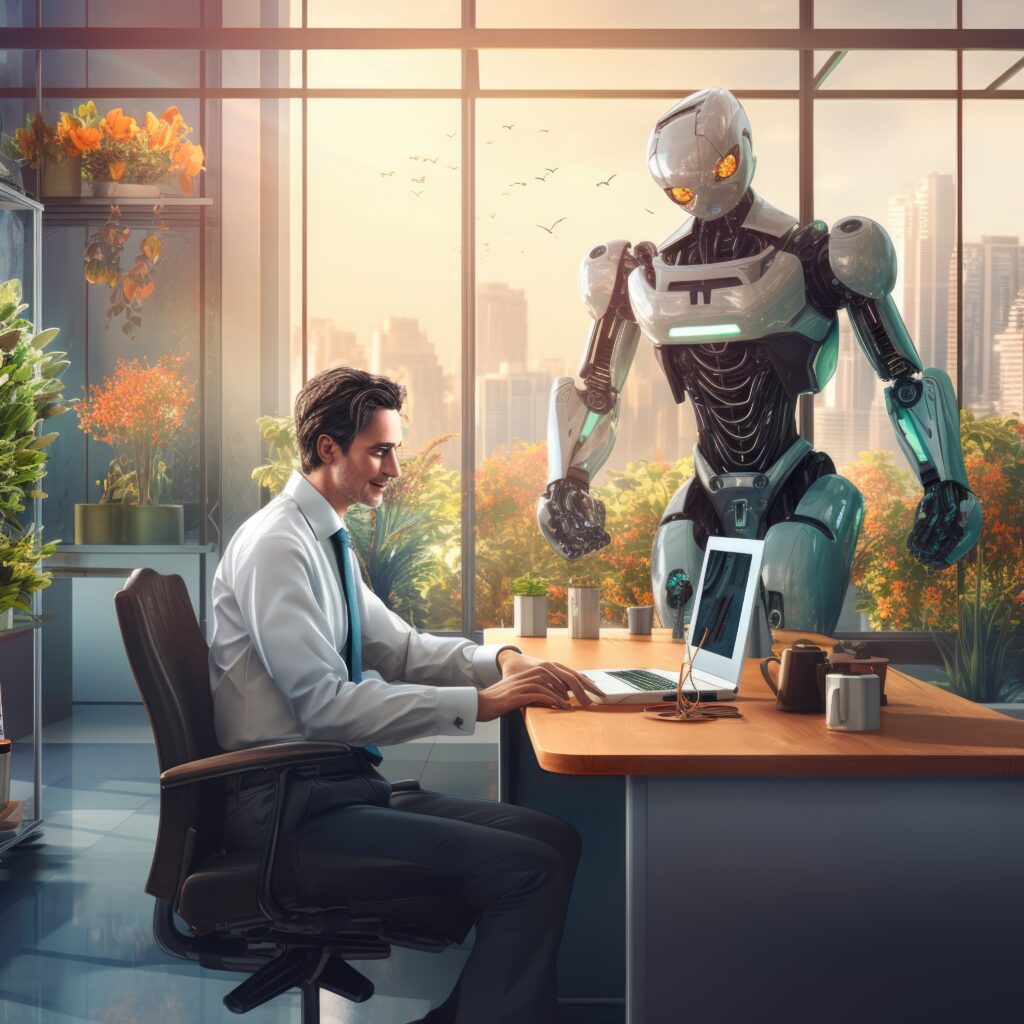
AI has reshaped content marketing—but it hasn’t replaced human ingenuity.
In 2025 and beyond, winning content strategies will be powered by AI—and perfected by people. Use automation to scale, but lean on storytellers to resonate. That’s the sweet spot.